Aunt Evvie Chalmers
Needful ThingsAunt Evvie Chalmers is Polly Chalmers’s deceased aunt, whose plainspoken counsel persists as an inner voice after her death. She appears in Polly’s dreams and thoughts during the crisis surrounding Leland Gaunt, giving Polly a way to interpret her own fear and guilt. Her presence makes the past more than a recollection: it becomes a source of guidance that helps Polly act in the present.
Identity and remembered advice
Aunt Evvie had once possessed Castle Rock’s Boston Post Cane, a distinction later associated with Lenny Partridge, the town’s oldest resident. The detail places her within the town’s history, while Polly’s recollections give her a more intimate significance: Aunt Evvie’s advice is remembered as unsentimental and direct. She had urged Polly to go where she wished but to do so alive, and not to become a ghost. That warning acquires fresh force when Polly faces the danger connected with Gaunt’s silver amulet and feels estranged from ordinary life.
A voice within Polly’s thoughts
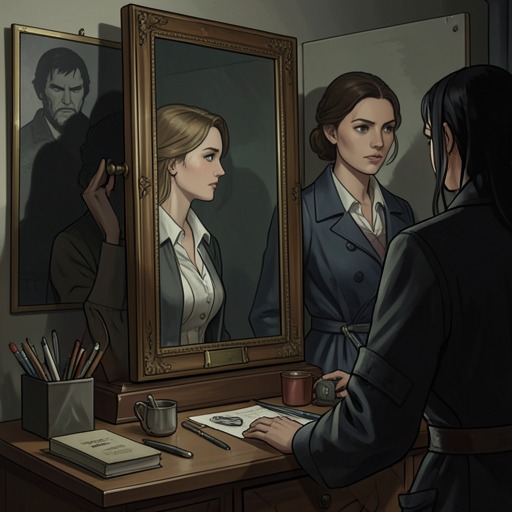
After learning that Alan Pangborn had acted behind her back, Polly turns over the betrayal and her own part in it. The voice that answers her is Aunt Evvie’s, but Polly recognizes that the anger beneath its familiar bluntness belongs to herself. Aunt Evvie has been dead for years; Polly understands the voice as her subconscious using her aunt’s manner to express what she has difficulty admitting directly. The episode does not present Aunt Evvie as literally returned. Instead, her remembered character gives Polly’s self-reproach and anger a form she can hear.
The dream of Needful Things
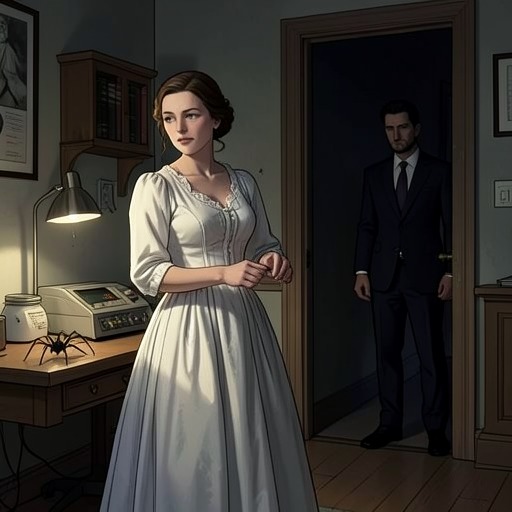
In a later dream, Polly enters Needful Things and finds Aunt Evvie, rather than Gaunt, behind the counter. She is dressed in a blue dress and shawl and appears alive, prompting Polly’s delighted relief. Yet the reunion quickly turns unsettling: Aunt Evvie does not recognize Polly by the name Polly offers, and addresses her as a customer. In the dream she says that everyone belongs in the shop because everyone loves a bargain, even when it costs everything. The familiar aunt has been placed inside Gaunt’s commercial world, where her voice can expose the logic of the store rather than comfort Polly.
Aunt Evvie’s warning in the dream is that buying at the shop also means selling. Polly protests that she needs what Gaunt offers, especially relief for her hands, but the dream frames that need as part of an exchange with a hidden cost. When Gaunt’s warning to Polly is answered by Aunt Evvie’s voice, the memory becomes an alternative to his authority: it urges Polly to decide who she is and to recognize the consequences of continuing the bargain. The scene links Polly’s two names, Patricia and Trisha, to her struggle to understand herself rather than simply accept the identity Gaunt’s dealings impose.
Guidance and narrative significance
Near the end of this inward struggle, Polly realizes that Alan is in danger and that she must reach him. She considers going to the Sheriff’s Office, but Aunt Evvie’s voice in her mind tells her not to go there and reminds her that she already knows where Alan is. Polly accepts the direction. Aunt Evvie does not provide new factual knowledge or intervene as a living character; her remembered voice helps Polly interpret what she already knows and move toward action.
Across these moments, Aunt Evvie’s role changes with Polly’s circumstances. Her old warning against becoming a ghost first echoes Polly’s estrangement, then her presence in the shop dream reveals the cost concealed by Gaunt’s offers, and finally her inner voice helps Polly choose a destination. The dead aunt functions as a remembered moral and emotional counterweight to Gaunt: not an external rescuer, but a familiar voice through which Polly can hear her own doubts, acknowledge responsibility, and act.